

Dr. med Walther, Ophthalmologist, Raubling, Bavaria
Incorporating magnetic field therapy successfully in the treatment of eye diseases
Slowing down the progression of eye diseases
There has been legitimate hope and significant evidence to slow down or even reverse degenerative eye diseases with the help of magnetic field therapy. So far, conventional medicine has not been able to find the cause or cure for macular degeneration and retinitis pigmentosa which, in the final stage, may result in blindness.
Due to the blood pressure regulatory effect as well as its immune system enhancement, magnetic resonance stimulation has proven very effective in ophthalmology. Incorporating MRS into our own treatment methods, patients will benefit from an improved circulation, which in turn causes a quick regeneration of nerve cells. It is necessary to use the whole body application first, followed by a local application. Treating illnesses of the eyes, the pillow needs to be placed under the patient’s head.
The regulatory effect of MRS can stabilize the intraocular pressure in glaucoma, saving medication and thus reducing side effects.
Other eye diseases that are positively influenced by MRS are “open-angle” glaucoma, optic atrophy, vascular weakness, retinal degeneration, macular degeneration, hematoma, edema, and Sjoegren’s Syndrome.
Glaucoma
Magnetic resonance stimulation is known to regulate the autonomic nervous system (hence also the optic nerve), to improve blood circulation throughout the body and to stimulate the nerve growth factor (NFG). This results in a positive influence on glaucoma. Magnetic field therapy should always accompany conventional medicine as a supportive measure. 50% of all visual field defects and its capacity threshold can be improved within three to six months (depending on its severity) after incorporating MRS. In 60% of all cases, the eye pressure level can be reduced by 5-8 mm Hg
within the same period of time, while maintaining medication. This drug therapy should mainly be maintained to keep the intraocular pressure level as low as possible. Using MRS can result in reducing the frequency of eye drop application as well as their concentration; thus prescribing less concentrated eye drops.
Microcirculation Problems
These patients usually suffer from low blood pressure, (systolic pressure less than 100) noticeable in cold hands, feet as well as elevated cholesterol. Visual fluctuation and impairment are mostly noticed in the morning, accompanied by vision restriction, “black out”, dizziness and tiredness. Using MRS on a regular basis can help to reduce these episodes.
Retinitis pigmentosa (RP)
is one of the most common forms of inherited retinal degenerations
(progressive loss of photoreceptor cells). So far, I only had four experiences in treating patients with magnetic field therapy. In two cases vision improvement was achieved (stabilizing visual acuity and improving constricted visual field). The other two cases remained at a status quo, however their condition was by far more advanced.
Age-Related Macular Degeneration (AMD)
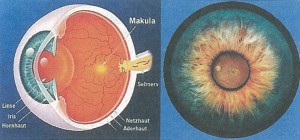
is a medical condition which usually affects older adults and results in loss of vision in the center of the visual field (macula). Again, referring to improved blood circulation and nerve growth factor (NGF) stimulation achieved by MRS, success was experienced in both, treating the “dry” and “wet” form . Even though ophthalmoscope conducted with ‘dry” AMD patients can not detect favorable morphological changes, 60% of MRS users experienced improved visual acuity by at least one stage. No other additional treatment methods were performed. Patients who added MRS to another orthomolecular therapy continued using both. Magnetic field therapy in the treatment of “wet” AMD, helped to decrease edema or bleeding which contributed to a quicker visual acuity improvement than treating “dry” AMD. A noticeable decay of hematoma was already known in trauma as well as diabetic retinopathy whenever magnetic field therapy had been applied.
Due to a relatively small number of reported MRS studies (cases), a life lasting effect can not yet officially be stated.
Correct MRS application
Magnetic resonance stimulation is a regulatory therapy which requires patience – indeed worth to endure – when treating chronic eye diseases.
Correct individually tested dose (intensities) may accelerate therapy success.
Diseases of the eyes are seldom an isolated health challenge, but are in many cases associated with other existing health problems (poor circulation, digestive tract disorders, mucous membranes). These factors have to be taken into consideration and need to be treated as well.
Combining MRS with other valued treatment methods like acupuncture, orthomolecular medicine, homeopathy, oxygen therapy etc. has proven to be even more successful.
This translation expresses the opinion of the author in a simple way, not
its complex medical terminology.